ServicesSolar Panel Repair
Solar Panel Repair in Bountiful
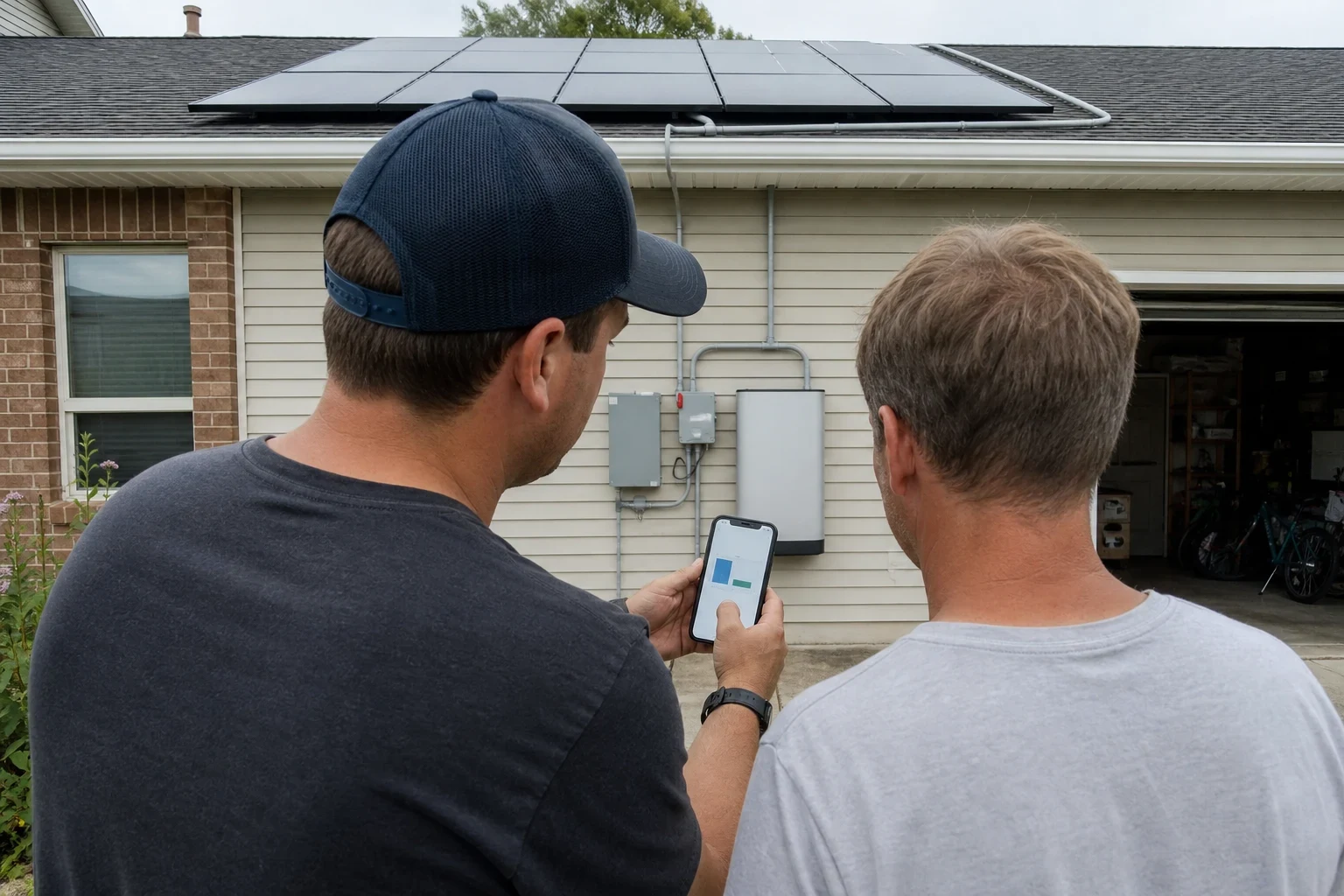
When your monitoring app shows a dip or your inverter starts blinking, we find the cause and fix it. You get a clear explanation, a written estimate and a system that is ready for the months when it should be earning the most.
Getting a struggling system back to full output
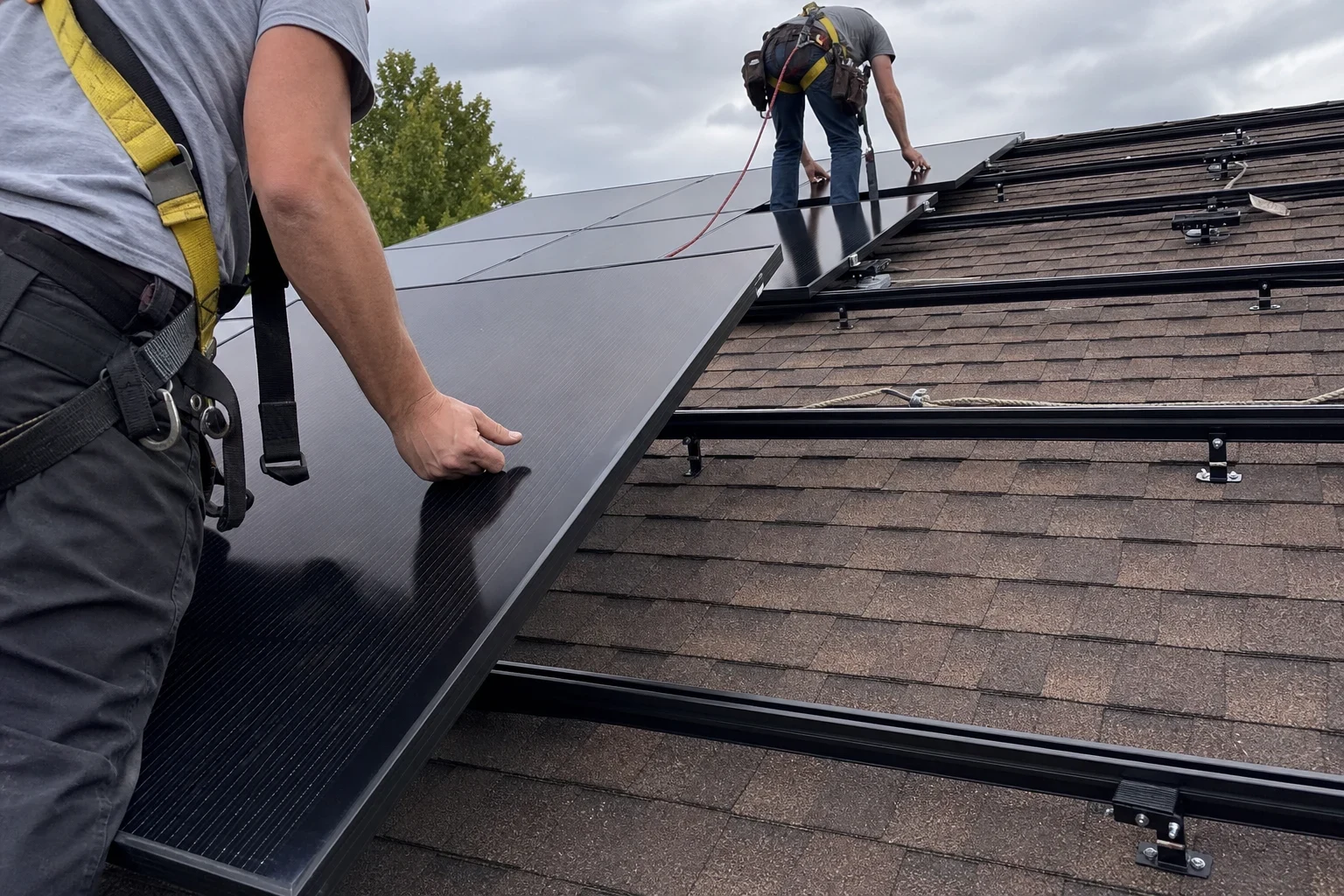
Solar panels have no moving parts, so most problems come from what connects them: inverters, optimizers, connectors, wiring and the racking that holds everything in place. A single failed connector can quietly take a whole string of panels offline, and you may not notice until a bill arrives higher than it should be.
We look at the whole system, not just the part that seems broken. That means reading your production history, testing each string and checking the hardware by hand. Then we tell you what we found and what it will take to fix it.
Timing matters here. A repair finished in early spring lets your panels work at full strength through the long summer days, when each week of lost production costs you the most. Repairs scheduled in late fall prepare the system for snow loads and freeze-thaw cycles before winter settles in.
What a repair visit covers
Production data review
We start with your monitoring history. Drops that line up with a certain time of day or a certain string point us toward the cause before we set up a ladder.
String and panel testing
We measure voltage and current on each string and compare it to what the panels should produce. This tells us whether the problem is a panel, a connection or the inverter.
Inverter and optimizer diagnosis
Error codes, failed fans and burned-out microinverters are some of the most common faults we see. We confirm which component failed and whether it is still covered by its manufacturer warranty.
Wiring and connector repair
Animals chew exposed wire, and connectors can loosen or corrode over years of heat and cold. We replace damaged runs and secure the wiring so it stays out of reach.
Racking and hardware checks
Strong canyon winds can loosen clamps and shift panels. We tighten, re-secure or replace hardware so the array holds steady through the next storm.
Signs your system needs a repair
- Output dropped and stayed low
- A cloudy week will lower production, but a drop that lasts through clear, sunny days points to a fault. If your app allows it, compare this month with the same month last year.
- Warning lights on the inverter
- When the status light changes color or the display shows a fault message, the inverter has usually shut itself down or cut back output to protect itself.
- Cracked or damaged panels
- Hail and falling debris can crack the glass. Moisture works in through those cracks and slowly lowers output.
- Chewed wires or nesting under the array
- Birds and squirrels like the sheltered space under panels. Their nests hold in heat and their teeth damage wiring.
- A breaker that keeps tripping
- If the solar breaker in your electrical panel trips over and over, something in the system is sending or drawing power the wrong way. Leave it off and let us take a look.
- Panels that look shifted
- After a windstorm, look for panels sitting out of line with the rest. Loose racking only gets worse with time.
How a repair goes, start to finish
- 1
Start with a free call
Describe what your app or inverter is showing, and we can book a free virtual appointment to look over your production data with you. A lot of faults can be narrowed down before a technician ever comes out.
- 2
On-site diagnosis
We test the system at your home, photograph anything damaged and walk you through the results. You see the problem for yourself.
- 3
A written estimate
You get a line-item estimate that separates parts, labor and anything a manufacturer warranty may cover. If replacing a part makes more sense than repairing it, we tell you plainly.
- 4
Repair, test and clean up
We make the repair, test every string again and confirm the inverter is reporting normally. Old parts and packaging leave with us, and your yard is left the way we found it.
What drives the price of a repair
We price a repair only once we know what failed, so you never pay for guesswork. Your written estimate shows where every dollar goes. These factors change the total the most.
- The part that failed
- Swapping a connector is a minor job. A central inverter replacement is far bigger, and the part accounts for most of the price.
- Manufacturer warranties
- Panels and inverters often come with their own manufacturer warranties. If a covered part fails, we help you file the claim so you do not pay for equipment that should be replaced free.
- Number of damaged panels
- A single cracked panel is a very different job from a full string of damaged ones. Storm damage often reaches more panels than it first seems.
- Reaching the array
- Steep roofs, tall homes and cramped spaces need extra time and safety gear to work on safely.
- Permit and inspection
- Certain electrical repairs require a permit and an inspection. If yours does, we obtain it and include it in the estimate.
Questions about solar panel repair
- Can you fix a system another company put in?
- Usually, yes. Have your panel and inverter brands ready when you call, and we will let you know if we can service them. Many homeowners come to us after their original installer stopped answering or went out of business.
- Should I repair my panels or replace them?
- Most systems need one part fixed, not a whole new array. We test everything first and tell you plainly. If your system is older and several parts are wearing out, we lay both options side by side so you can pick what fits your home.
- Will homeowners insurance pay for hail damage to panels?
- Many policies cover it, but coverage differs between insurers. We photograph each cracked or damaged panel and list what we found in a written estimate you can give your insurance company. Your adjuster makes the coverage call, and we are happy to explain what we saw on the roof.
- Do you make repairs in winter?
- Often, yes, as long as the array is clear of snow and ice and the work is safe. If your system quits in December, fixing it then has it ready for spring. Some homeowners prefer to save non-urgent repairs for a dry spell in fall or early spring.
- Who does the electrical work on a repair?
- Our own crew. We are licensed in all states served, every electrical repair meets code, and we pull a permit whenever the job requires one.
Get your panels ready for the sunny months
Tell us what your monitoring app or inverter is showing. We serve Bountiful, Centerville, Farmington and the surrounding area, and we can usually narrow the problem down during a free virtual appointment.