ServicesSolar System Add-Ons
Solar System Add-Ons for Bountiful Homes
Life at home keeps changing after the panels go up. A new electric car, a finished basement or central air can all raise your power use. We size and install additions that help the system you own keep pace, and we schedule them to be running before the season that leans on them hardest.
Adding On Instead of Starting From Scratch
Your system was designed around the bills you had back then. When those bills start rising again, the panels are rarely the problem. Your household now uses more than they were built to cover. An add-on fills that gap and leaves working equipment in place for the years it still has ahead.
First we compare a year of your usage with what your system really produced over the same months. That side-by-side shows whether you need more panels, storage for the power you already make, or just a clearer view of where your electricity goes. If a small change is all it takes, we say so.
When the work happens counts too. Summer cooling and short winter days strain your home in different ways, so we aim to finish before the months when a shortfall would show up on your bill.
Add-ons we install
Added generating capacity
More panels tied into your existing setup to cover higher usage. We check that your inverter and electrical panel can take the extra load before recommending it.
Battery added to an existing system
Store midday production for evenings and outages instead of sending it to the grid. Our Battery Storage page covers the batteries themselves in more detail.
EV charger installation
A dedicated charger wired for your car, with the circuit sized properly. We look at whether your current solar output can cover the new charging load or whether it needs a boost.
Monitoring upgrades
Production and consumption monitoring so you can see what the system makes each day and what your home uses. It is the easiest way to spot when something is off.
Inverter and electrical panel upgrades
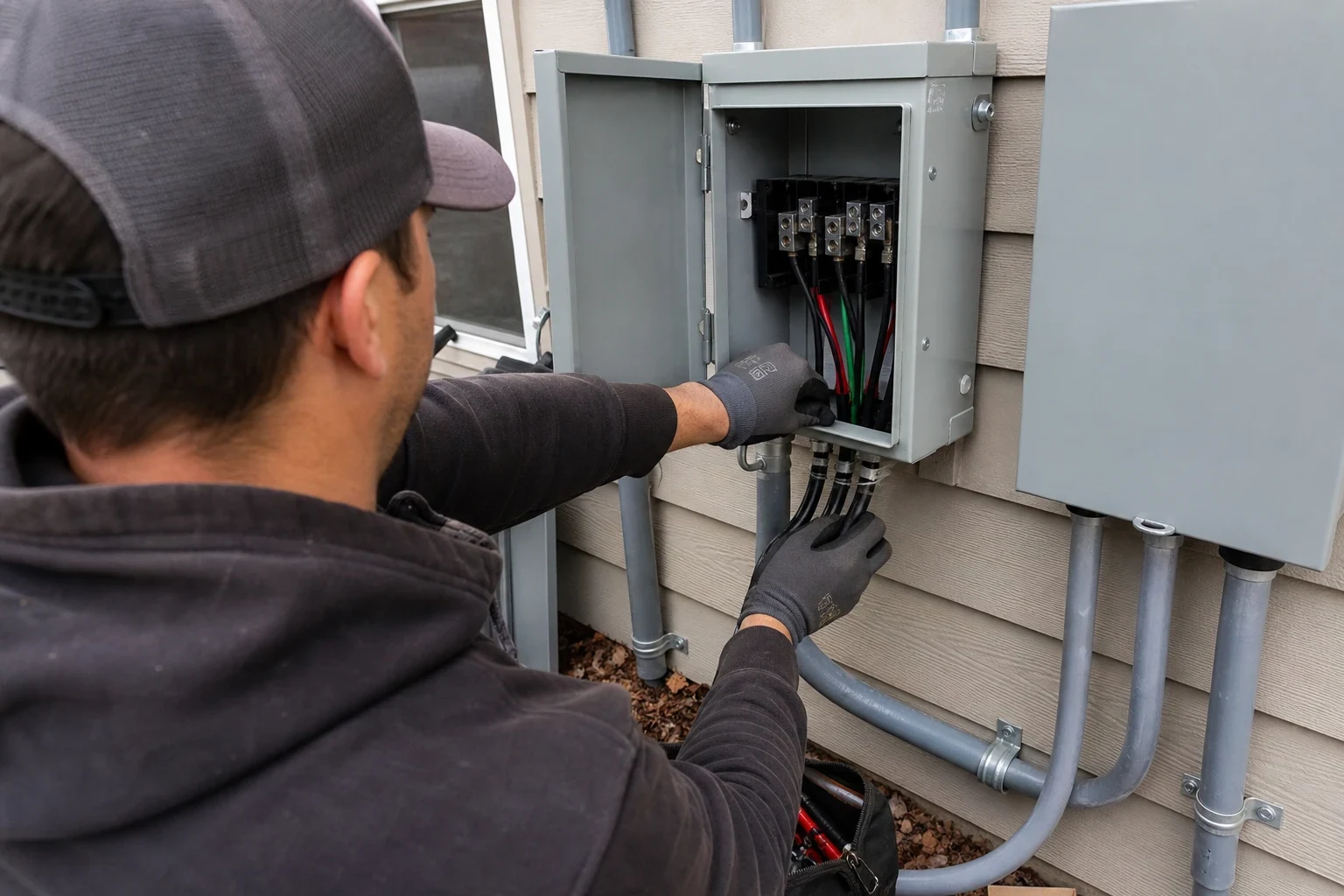
Older string inverters and full electrical panels are often what limit an expansion. When one of them is the bottleneck, we upgrade it as part of the job.
Signs your system could use an add-on
Your bills are climbing again
If your power bill has drifted up year over year, your usage has likely passed what the system was built for.
You drive or plan to drive electric
Charging a car at home can add a meaningful load to your monthly usage. Planning the charger and the solar together keeps that cost from landing on your bill.
You are sending power out and buying it back
Under current utility rules, power you export often earns less than the power you buy in the evening. A battery lets you use your own production later in the day.
Outages leave you in the dark
Most grid-tied systems shut off when the grid goes down. Adding storage lets key circuits keep running through a winter storm.
You cannot tell how the system is doing
No app, an outdated display or numbers that never seem to change. Better monitoring answers the question in a glance.
The Steps of an Add-On Project
- 1
A free savings analysis over the phone
We review your bills, the equipment you have and what is different at home now. If you prefer to show us on camera, we can book a free virtual appointment.
- 2
Equipment check and a written plan
We inspect your inverter, breaker box and wiring to see what the current system can handle. Then you receive a written plan naming each piece of equipment and the reason for it.
- 3
Paperwork and your install date
We file the permit and utility forms for the change and pick an install date before the season you are getting ready for. Because we are licensed in every state we serve, the electrical work runs under our own license.
- 4
The install
Most add-ons are finished in a day or less. We cover the work area, keep the power off for as little time as possible and tidy up before leaving.
- 5
Inspection and a walk-through
After the inspection passes, we switch on the new equipment and show you how to read your monitoring, so the change is easy to see.
What Drives the Price of an Add-On
We price each add-on around the equipment already at your home, so two requests that sound alike can cost different amounts. Your estimate lists each piece on its own line, so you see what everything costs. Many projects are available with $0 up front.
- What you are adding and how big
- Upgrading monitoring is a quick job. Adding a battery or expanding the array takes more equipment and more hours.
- The inverter you have now
- Some inverters can take extra panels or a battery without changes. Others must be replaced or matched with new equipment first.
- Space in your electrical panel
- If your breaker box has no room left, it may need an upgrade before a battery or EV charger can be safely connected.
- Length of the wire runs
- The farther new equipment sits from your meter and panel, the more material and time the job needs.
- Permit and utility steps
- Changing a grid-tied system typically calls for a permit and a revised interconnection with your utility. Both are built into your estimate.
Common add-on questions from Bountiful homeowners
Something not covered here? (801) 877-7243
A different installer put in my panels. Can you still work with them?
In most cases, yes. Before we plan anything, we check that the existing panels, inverter and wiring are compatible with what you want to add and are working properly. If the original setup would make an add-on a poor use of your money, we will say so and explain what we found.
Could new equipment change the coverage on my current system?
It might, since every original installer writes its own terms. Have your paperwork handy and we will read through it with you before any work begins, so nothing catches you off guard. We will also explain the coverage on the new equipment we install as part of your written plan.
How do I know whether I need more panels or a battery?
It comes down to what is pushing your bill up. If your home simply uses more power than the system makes, added capacity is the fix. If you produce plenty at midday but buy power in the evening, a battery usually helps more. Your free savings analysis is where we work that out from your actual numbers.
What time of year should I plan an add-on?
Aim for a few weeks ahead of the season that worries you. Spring is a good window before summer cooling loads, and early fall makes sense if winter outages are the concern. Permits and utility approval take time, so an early start keeps the schedule comfortable.
Will my power be off during the install?
Only for a few hours in most cases, while we connect the new equipment. We will walk you through the plan beforehand so you can arrange your day around it.
Find Out What Your System Needs Next
Let us know what is different at home, and we will show you which add-on fits, if one does, before the coming season. Have a friend weighing solar? Each referral of yours that goes solar earns you $1,000.